There’s something timeless about growing your own food. A raised garden bed turns a patch of backyard into a living pantry, a science lab, and a peaceful retreat all at once. But for many homeowners, one question still lingers like a stubborn weed:
“Is pressure-treated wood safe for growing vegetables?”
The short answer, backed by years of research and modern standards, is yes, when you’re using today’s copper-based treatments like Preserve® CA (copper azole). And once that question is settled, a world of durable, long-lasting garden design opens up.
Let’s dig into the science first, then we’ll roll up our sleeves and build something beautiful.
The Evolution of Treated Wood: From Concern to Confidence
Not all treated wood is created equal, and much of the lingering concern comes from outdated information.
Over the past two decades, wood preservation technology has advanced significantly. Today’s residential treated wood products, including Preserve® CA (copper azole), are part of a modern generation of preservatives designed with both performance and environmental responsibility in mind.
Copper azole treatments:
- Use copper as the primary protective element
- Are registered for residential use by the EPA
- Are widely used in landscaping, decking, and ground-contact applications
Copper itself isn’t some foreign intruder, it’s a naturally occurring element and an essential micronutrient for both plants and humans. Today’s treated wood, including Preserve® CA (copper azole), represents a new generation of preservatives designed with both performance and environmental responsibility in mind.
What the Research Actually Says About Garden Beds
This is where the conversation shifts from opinion to evidence.
Multiple studies, including long-term research conducted by Oregon State University, have examined whether copper from treated wood migrates into soil and ultimately into plants.
The findings are remarkably consistent:
- Copper levels in soil may increase slightly only within about 1 inch of the wood surface
- No measurable increase in copper has been detected in vegetables grown in treated wood beds
- After multiple growing seasons, crops grown in treated beds are chemically indistinguishable from those grown in untreated beds
In other words, the vegetables on your plate aren’t absorbing additional copper from the wood.
Even broader guidance from university extension programs aligns with this. Research shows that while small amounts of copper may leach into nearby soil, plants do not take up that copper at meaningful levels, and any increases remain localized and minimal.
Why Copper Azole Works (and Why It Stays Put)
Think of copper azole like a bodyguard embedded within the wood fibers. It protects against decay, fungi, and insects, but it doesn’t roam freely.
When small amounts of copper do move into the soil:
- They bind tightly to organic matter
- They become biologically inactive
- They are not readily absorbed by plant roots
It’s less like dye bleeding into water, and more like a magnet snapping into place and refusing to budge.
That stability is part of what makes copper azole both effective and safe.
Expert Insight

“After five years of data collection, we have found no impact of treated wood garden bed frames on the copper concentrations in vegetables grown in them. As our study enters its 6th year, the treated beds are showing their value as the untreated beds are showing signs of advanced decay and will likely only last through the end of the 6th year before replacement is required. The treated garden boxes by contrast have many years of service left in them.”
- Dr. Gerald Presley, Oregon State University
You can read more about Dr. Presley, Dr. Konkler and Dr. Edmund's research here:
https://extension.oregonstate.edu/catalog/em-pressure-treated-wood-raised-bed-construction-oregon
Why Homeowners Choose Preserve® CA for Raised Beds
Beyond safety, there’s a practical reason copper azole treated wood has become a go-to material:
1. Longevity
Untreated wood, especially pine, can begin to rot within just a few seasons. Copper azole-treated lumber is built for ground contact and can last for many years.
2. Structural Strength
Raised beds hold significant weight from soil and water. Treated lumber resists warping, decay, and insect damage.
3. Cost Efficiency
Compared to cedar or redwood, treated lumber offers a more budget-friendly way to build larger or multiple beds.
4. Proven Performance
Preserve® CA has been widely used across North America in residential applications, giving homeowners confidence in both durability and safety.
How to Build a Raised Garden Bed (Step-by-Step)
Now for the fun part, turning lumber into something that grows life.
Materials
- Preserve® CA-treated lumber (commonly 2×6 or 2×12 boards)
- Exterior-grade screws or galvanized fasteners
- Corner posts (optional for reinforcement)
- Drill/driver
- Level
- Soil mix (topsoil + compost)
Step 1: Choose the Right Location
Look for a spot that gets:
- 6 to 8 hours of sunlight daily
- Good drainage
- Easy access to water
Flat ground is ideal, but slight slopes can be managed with leveling.
Step 2: Determine Bed Size
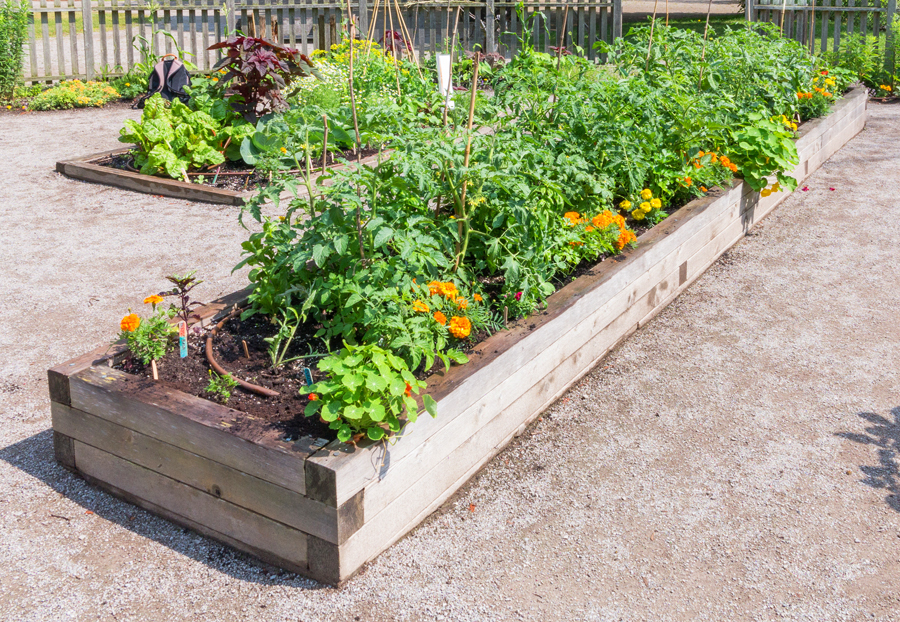
A classic raised bed footprint is:
- 4 feet wide (easy reach from either side)
- 6 to 8 feet long
- 10 to 12 inches tall
If you’re building taller beds (12 inches or more), consider thicker boards to prevent bowing under soil pressure.
Step 3: Cut and Assemble the Frame
Cut your boards to length and assemble a simple rectangle:
- Pre-drill holes to prevent splitting
- Use corrosion-resistant screws
- Reinforce corners with posts if needed
Step 4: Prepare the Ground
- Remove grass or weeds
- Loosen the soil underneath
- Optionally lay down landscape fabric or cardboard
This helps roots establish more easily and keeps weeds out.
Step 5: (Optional) Add a Liner
While not necessary, some gardeners choose to add a polyethylene liner between the wood and soil for added peace of mind. This is a personal preference, not a requirement.
Step 6: Fill with Soil
Use a high-quality blend:
- 60% topsoil
- 30% compost
- 10% aeration (sand or perlite)
Water thoroughly after filling to help everything settle.
Step 7: Plant and Enjoy
Now comes the rewarding part, planting your vegetables, herbs, or flowers.
Raised beds warm up faster in spring, drain better after rain, and reduce soil compaction. Your plants get a head start, and you get a front-row seat to watch it all unfold.
Final Thoughts: Growing with Confidence
Gardening is an act of trust, you plant something small and believe it will become something nourishing.
Modern research supports that same trust when it comes to using copper azole treated wood like Preserve® CA. The data shows:
- No meaningful copper uptake in vegetables
- Minimal and localized soil interaction
- Safe, EPA-registered materials for residential use
That means you can focus less on worry, and more on what really matters: enjoying your harvest of home-grown crops.
Sources:
- Viance: https://www.treatedwood.com/news/2024-research-update-on-treated-wood-used-for-garden-beds
- Oregon State University: https://extension.oregonstate.edu/catalog/em-pressure-treated-wood-raised-bed-construction-oregon
- Wood and Fiber Science Vol. 58 No. 2 (2026): https://wfs.swst.org/index.php/wfs/article/view/3362/2772