


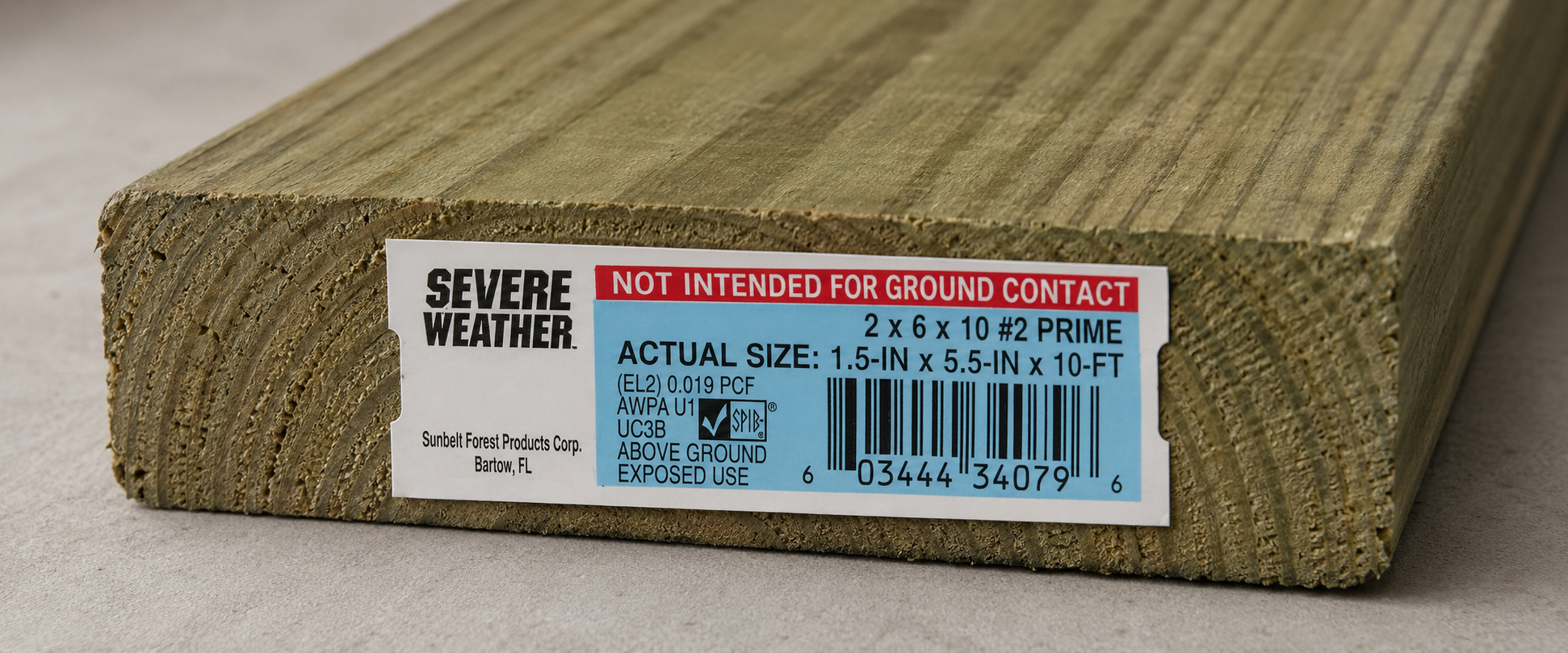
A lumber end tag may be small, but it carries a lot of project-saving information. Think of it as the wood’s passport: it tells you where that piece of lumber is meant to be used, what protection it carries, who treated it, and whether it was produced to recognized industry standards. Before you load a cart for a deck, fence, raised planter, repair project, or backyard build, taking a few seconds to read the tag can help you choose lumber that fits the exposure conditions it will actually face.
The first thing to look for is evidence that the wood has been treated in accordance with the American Wood Protection Association’s standards. Look for AWPA U1 on the end tag. AWPA U1 is the primary standard for preservative-treated wood. AWPA explains that the end tag should also include the Use Category, the preservative name or abbreviation, the specified retention, and, for code-related applications, a checkmark logo and quality mark from an ALSC-accredited agency. If “AWPA U1” and the Use Category are not on the tag, AWPA notes that the wood probably does not meet AWPA Standards.
The next piece of the puzzle is the Use Category, usually shown as a short code for example UC3B or UC4A. These codes describe the type of exposure the wood is designed to handle. TreatedWood.com summarizes this simply: the exposure statement tells the proper use application, while the Use Category designation identifies the AWPA category for that application. The tag also identifies the preservative code, retention level, inspection agency, treater name, location, and, when applicable, warranty or handling information.
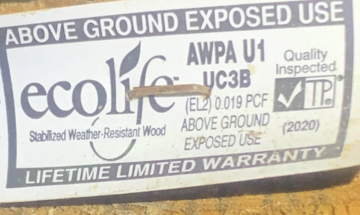
For a common Above Ground example, look at an Ecolife® end tag (or a Severe Weather tag with EL2). On the infographic, the Ecolife example shows “ABOVE GROUND USE,” “AWPA U1,” “(EL2) ECOLIFE,” “0.019 pcf,” and “UC3B.” That tells you the lumber is intended for above-ground exterior use, treated with the EL2 preservative system, and designed for UC3B exposure. Ecolife with DCOI is perfect for above-ground applications that are 6 inches or more from the ground in certain residential and agricultural uses
That does not mean Above Ground lumber is delicate. UC3B is for exterior wood exposed to weather, including intermittent wetting, when the material is not in contact with the ground and has enough opportunity to dry. AWPA’s homeowner guidance describes UC3B as “Exterior Above Ground, Uncoated or Poor Water Runoff,” while UC4A is “Ground Contact, General Use.” In plain DIY language, UC3B is often a good fit for projects such as deck boards, deck railings, fence pickets, arbors, pergolas, trellises, and similar above-ground applications when the wood is properly installed and maintained.
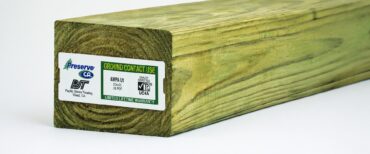
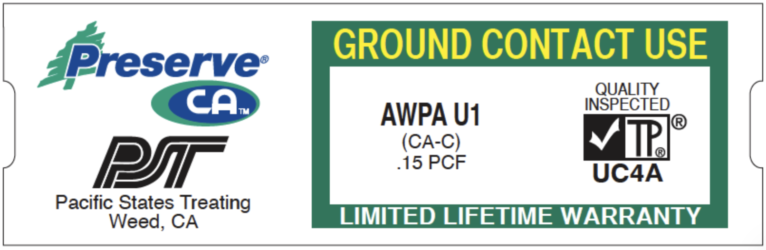
For a Ground Contact example, look for Preserve® CA. The infographic’s sample Preserve CA tag shows “GROUND CONTACT USE,” “AWPA U1,” “CA-C,” “0.15 pcf,” and “UC4A.” The Preserve CA fact sheet identifies Preserve CA as Copper Azole pressure-treated wood, lists AWPA Use Categories including UC3B and UC4A, and notes that AWPA U1 and the CheckMark logo on end tags indicate the preservative is listed in and treated to AWPA standards and quality-inspected by an ALSC-accredited third-party inspection agency. AWPA’s own retention table lists CA-C at 0.15 pcf for UC4A in Southern Pine, matching the Ground Contact example shown in the infographic.
The most common mistake is assuming “above ground” simply means “not buried.” It is really about the hazard level around the wood. Some components may be physically above the soil but still face ground-contact-like conditions. The AWPA residential use infographic notes that above-ground components may require Ground Contact treatment when they are difficult to replace, critical to the structure, or exposed to hazards caused by climate, construction details, or natural and artificial processes.
That is why airflow, clearance, moisture, and debris matter. Wood close to grade, trapped under leaves, pressed against mulch, repeatedly wetted by sprinklers, or boxed into a poorly ventilated area may not dry well between wetting cycles. In those cases, choosing Ground Contact lumber, such as Preserve CA treated to UC4A or higher, is the safer specification. AWPA also notes that some lumber 2 inches or less in thickness may be treated only for above-ground use and may not last long in a ground-contact application. Ground contact applications require UC4A or higher.
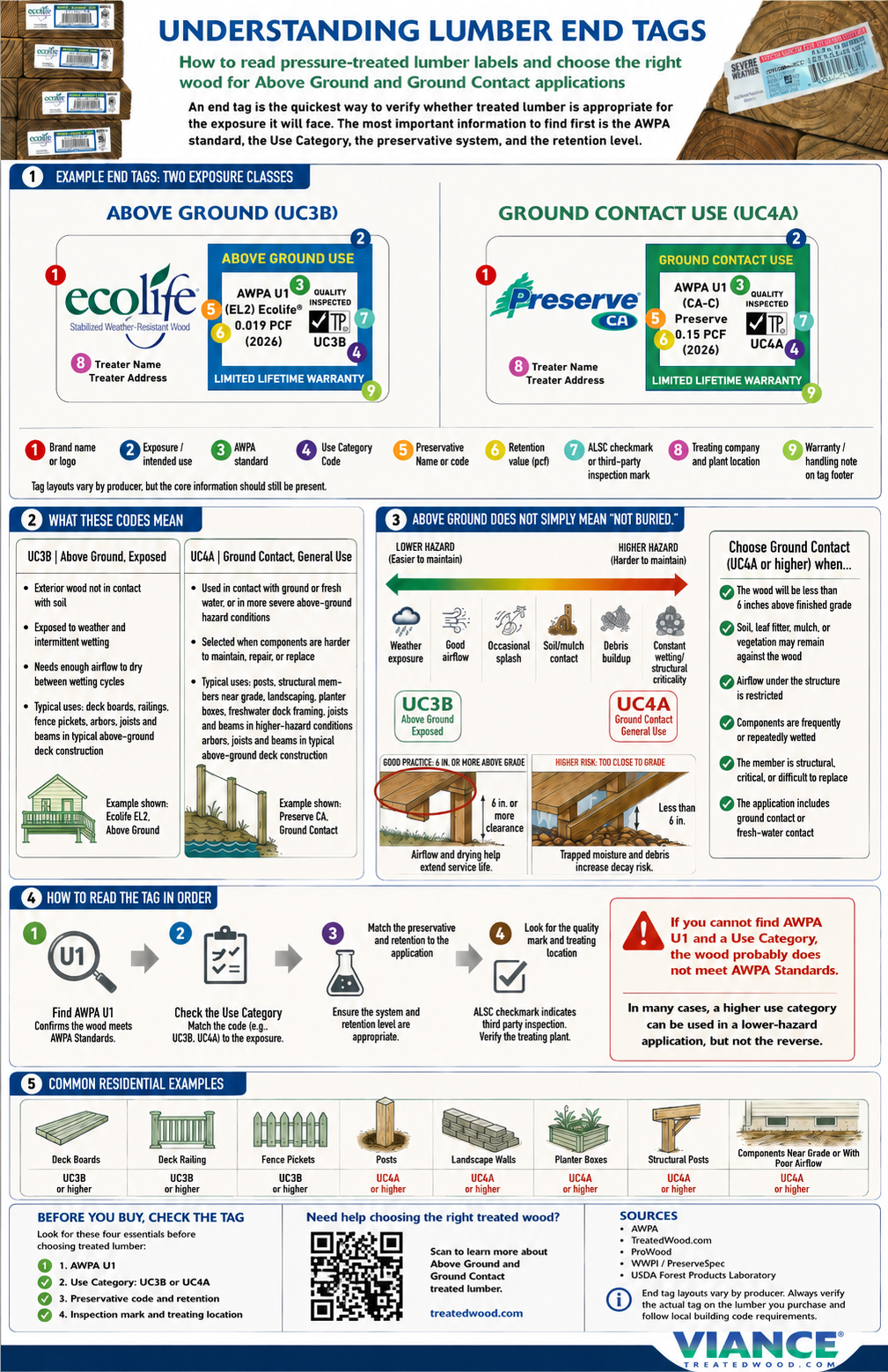
A good tag-reading routine is simple. First, find AWPA U1. Second, match the Use Category to your project conditions. Third, check the preservative code and retention level, such as EL2 at 0.019 pcf for the Ecolife UC3B example or CA-C at 0.15 pcf for the Preserve CA UC4A example. Fourth, look for the quality mark, treating company, and plant location.
Finally, remember that the tag is not decorative confetti stapled to the end of the board. It is your quickest field guide to using the treated wood product most suitable for the intended end-use application the right place. For deck boards, railings, fence pickets, and similar above-ground projects with good airflow, an Ecolife Above Ground tag marked UC3B may be the right fit. For posts, planter boxes, landscape walls, structural members near grade, freshwater contact, or components that stay wet or are hard to replace, choose a Ground Contact tag marked UC4A or higher, such as Preserve CA. When in doubt, read the tag before you build.
Click the infographic to the right to download a full sized easy to understand PDF version
Sources :
AWPA homeowner guidance on AWPA U1 and Use Categories - https://awpa.com/info/technical/homeowners
AWPA Use Category System - https://awpa.com/info/technical/homeowners
Ecolife product information - https://www.treatedwood.com/news/know-the-difference-with-ecolife-dcoi-treated-wood
Preserve CA product literature - https://assets.treatedwood.com/uploads/documents/products/preserve/Preserve-CA-fact-sheet.pdf
ProWood - https://www.prowood.com/blog/what-is-pressure-treated-lumber
WWPI/PreserveSpec - https://preservedwood.org/wp-content/uploads/PS_UC_Residential.pdf