


May Is Deck Safety Month
Is Your Deck Ready for Summer?
Summer is officially just a few weeks away, and while only a few days remain in May, Deck Safety Month® is still an important reminder for homeowners to take action before the outdoor living season reaches full swing.
As the weather warms, decks quickly become the heart of the home. From weekend cookouts to quiet evenings under the stars, your deck carries the load, both literally and figuratively. That is why the North American Deck and Railing Association (NADRA) dedicates May to Deck Safety Month®, encouraging homeowners to Check Your Deck® before peak usage begins.
And while Deck Safety Month® may be recognized in May, deck safety should not be limited to one month of the year. A conscientious deck owner should stay alert year-round, especially as moisture, temperature swings, UV exposure, and seasonal use continue to affect outdoor structures over time.
Decks are exposed year-round to moisture, temperature swings, UV exposure, and seasonal loads. Over time, even a well-built structure can weaken. A quick inspection each spring can help identify issues early, prevent costly repairs, and most importantly, protect the people who use it.
Why Deck Safety Matters
Unlike other parts of your home, decks often age quietly. Structural wear, fastener corrosion, and moisture damage can develop out of sight until a failure occurs.
NADRA emphasizes that decks, like roofs or windows, have a service life and require regular evaluation.
In fact, thousands of injuries occur each year due to deck, railing, and stair failures, many of which could have been prevented through routine inspections and maintenance.
Spring is the ideal time to inspect your deck, especially after winter conditions like snow and moisture have added stress to the structure.
The NADRA Approach: Educate, Inspect, Correct
Deck Safety Month is built around three simple actions:
- Educate yourself on proper deck construction and maintenance
- Inspect your deck annually for signs of wear or failure
- Correct any issues before they become safety hazards
To help homeowners take action, NADRA developed a widely used 10-point consumer checklist, a practical guide for evaluating deck safety.
How to Inspect Your Deck for Summer
You do not need to be a contractor to perform a basic inspection. A careful walk-through, combined with a few hands-on checks, can reveal many common issues.
Check for Wood Damage and Decay
Look closely at decking boards, posts, and structural components.
- Probe suspect areas with a screwdriver
- Watch for soft, spongy wood or deep penetration
- Look for cracks, splintering, or insect damage
Decay often develops in places where moisture lingers, especially around fasteners and joints.
Inspect Fasteners and Connectors
Your deck relies on metal hardware to stay secure.
- Look for rust or corrosion
- Tighten loose screws or bolts
- Replace popped nails or deteriorated connectors
Failing fasteners can compromise the entire structure, even if the wood appears sound.
Examine the Ledger Board
The ledger board connects your deck to your home and is one of the most critical structural components.
- Check for gaps or movement
- Look for signs of water damage
- Ensure flashing is intact and directing water away
Improper ledger attachment is a leading cause of deck failure.
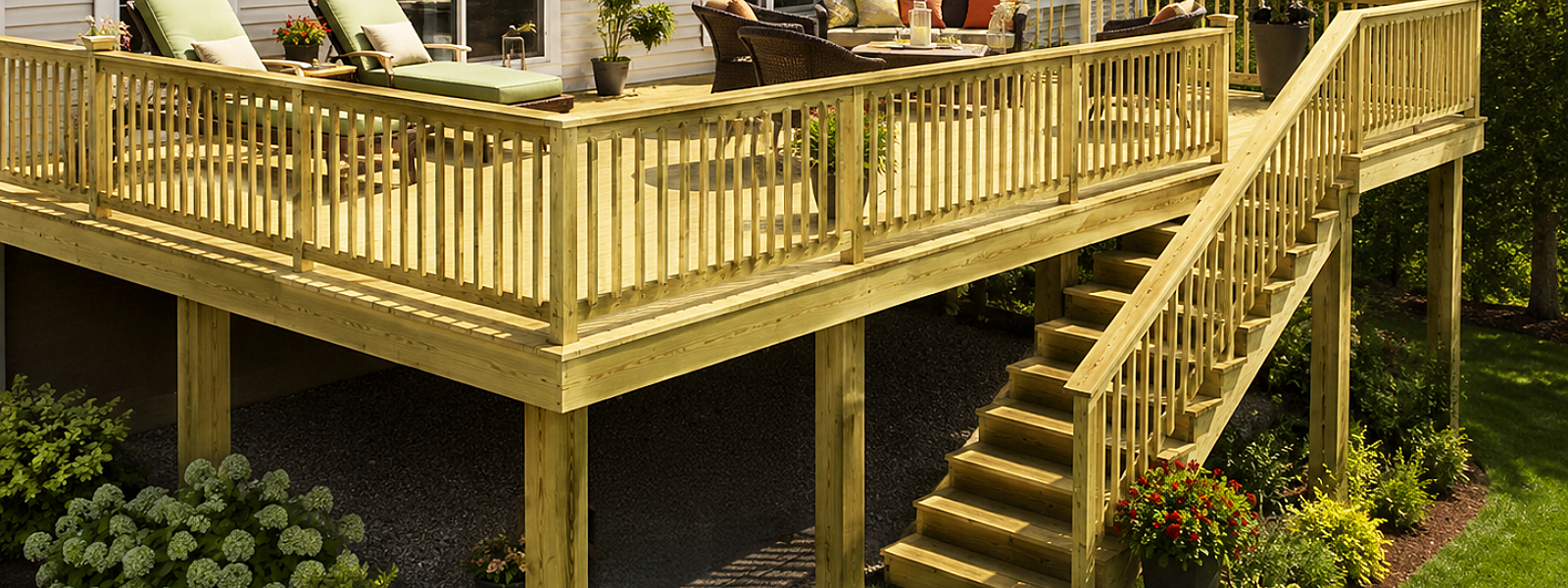
Evaluate Railings and Guards
Safety barriers should feel solid and secure.
- Push gently on railings to test stability
- Check baluster spacing and attachment
- Ensure all guardrails are firmly anchored
Loose railings are one of the most common and dangerous deck issues.
Inspect Stairs and Access Points
Stairs take constant impact and wear.
- Check treads, risers, and stringers for stability
- Ensure handrails are secure
- Look for uneven or shifting steps
A small issue here can quickly become a trip hazard.
Look Beneath the Surface
If possible, inspect the structure underneath your deck.
- Check beams, joists, and posts for rot or sagging
- Look for shifting or settling
- Identify any areas where water collects
Structural problems often begin below the surface and go unnoticed.
Review Surrounding Safety Hazards
Deck safety extends beyond the structure itself.
- Keep grills and fire features a safe distance away
- Ensure proper lighting on stairs and entry points
- Remove debris that can trap moisture
NADRA’s checklist also highlights fire safety and general use conditions as part of a complete inspection.
When to Call a Professional
While a DIY inspection is a great first step, some issues require trained eyes.
NADRA recommends hiring a qualified deck builder or inspector, especially for:
- Older decks
- Recently purchased homes
- Structural concerns or visible damage
A professional inspection ensures that your deck meets current safety standards and building codes, which are updated regularly.
Keep Your Deck Safe Year-Round
Inspection is only part of the equation. Regular maintenance helps extend the life of your deck and preserve its performance.
- Clean debris and buildup of organic material
- Apply water-repellent finishes as needed
- Replace damaged boards promptly
- Use properly treated wood for repairs or upgrades
Pressure-treated wood products are designed to resist decay and insect damage, making them a durable choice for long-term outdoor performance.
Make Deck Safety Part of Your Spring Routine
Your deck is more than just an outdoor feature. It is a gathering place, a relaxation zone, and a stage for summer memories.
Taking a few minutes now to inspect your deck can make all the difference between a season of worry and a season of enjoyment. As NADRA reminds homeowners each year, “Check Your Deck®” before the season begins, and keep deck safety in mind all year long. A safer deck means a better summer for everyone.
Sources:
NADRA - https://www.nadra.org/blog/may-is-deck-safety-month-nadra-reminds-homeowners-to-check-your-deck-and-schedule-a-spring-inspection
NADRA - https://www.nadra.org/deck-safety
NADRA - https://www.nadra.org/wp-content/uploads/2023/05/NADRA_DSM_Checklist.pdf